Strategic Tips
|
|

A successful restaurant is experienced long before the first plate of food arrives. Guests form an impression from the moment they approach the entrance, and the environment continues influencing how they feel throughout the entire visit. Lighting, sound, seating, architecture, materials, circulation, and even the distance between tables all contribute to that experience. This is why memorable restaurant design requires much more than selecting beautiful finishes or expensive furniture. The strongest spaces create an atmosphere that supports both the food and the identity of the brand.
The Experience Begins at the Entrance
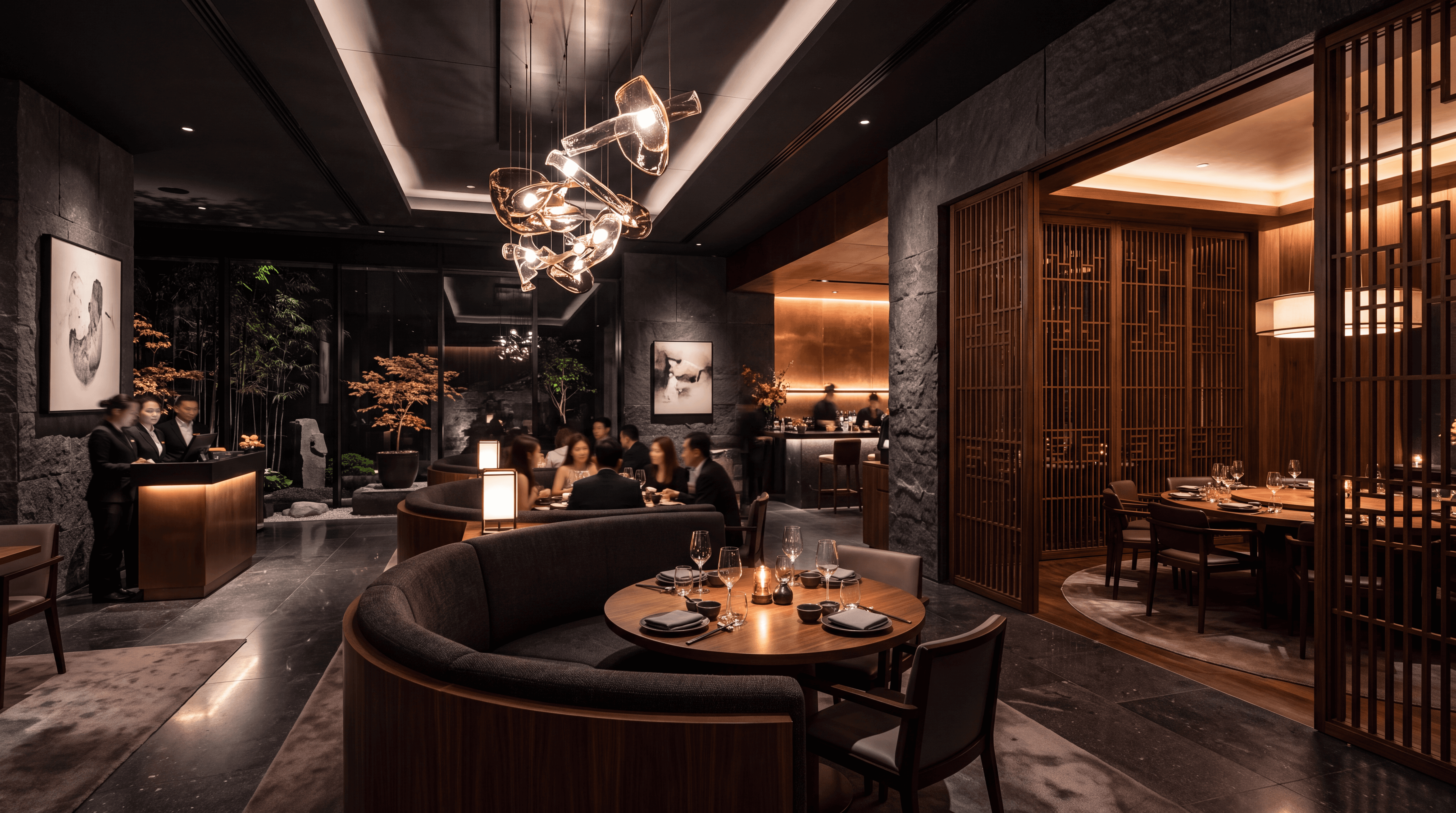
Arrival is one of the most important moments in restaurant design because it establishes expectations. A dramatic entrance can create excitement, while a more understated approach can communicate exclusivity or intimacy. Once inside, guests should intuitively understand where to go, whether that means approaching a host station, moving toward a bar, or being drawn deeper into the space. These first few seconds establish the personality of the restaurant before a guest has interacted with the staff or opened the menu.
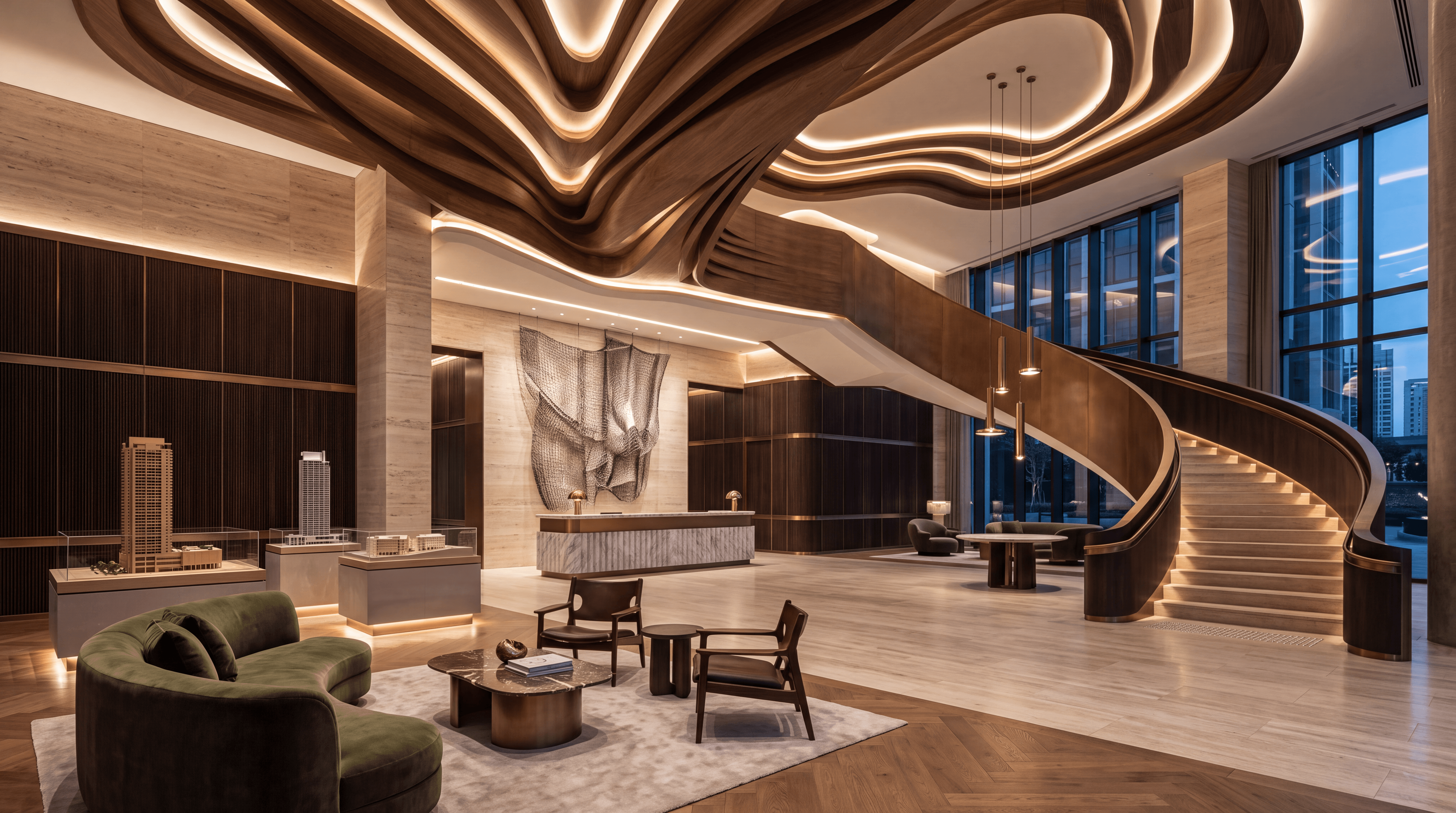
From there, the experience becomes a sequence. A lively bar may intentionally feel different from the dining room. Private seating may become more intimate. A feature wall, open kitchen, artwork, staircase, or lighting installation can create a memorable focal point. Good restaurant design controls these moments rather than allowing every area to compete for attention at the same time.
Lighting and Seating Can Completely Change the Atmosphere
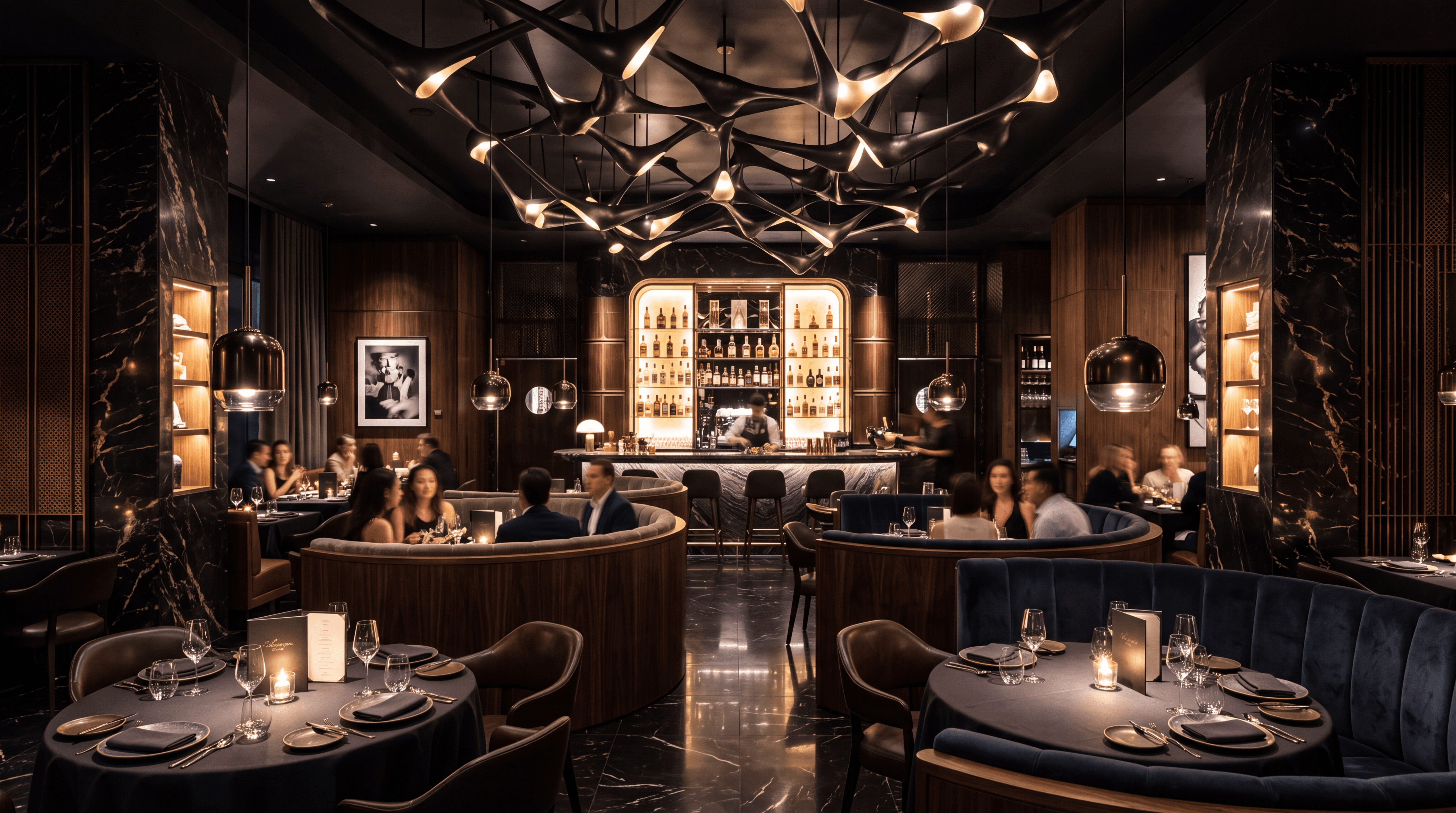
Lighting is particularly powerful because the same architecture can feel entirely different depending on how it is illuminated. Warm, low-level lighting can create intimacy and encourage guests to stay longer, while brighter and more energetic environments may support faster-paced concepts. The best lighting also considers how food, people, materials, and tables will appear—not just how the architecture looks in an empty room.
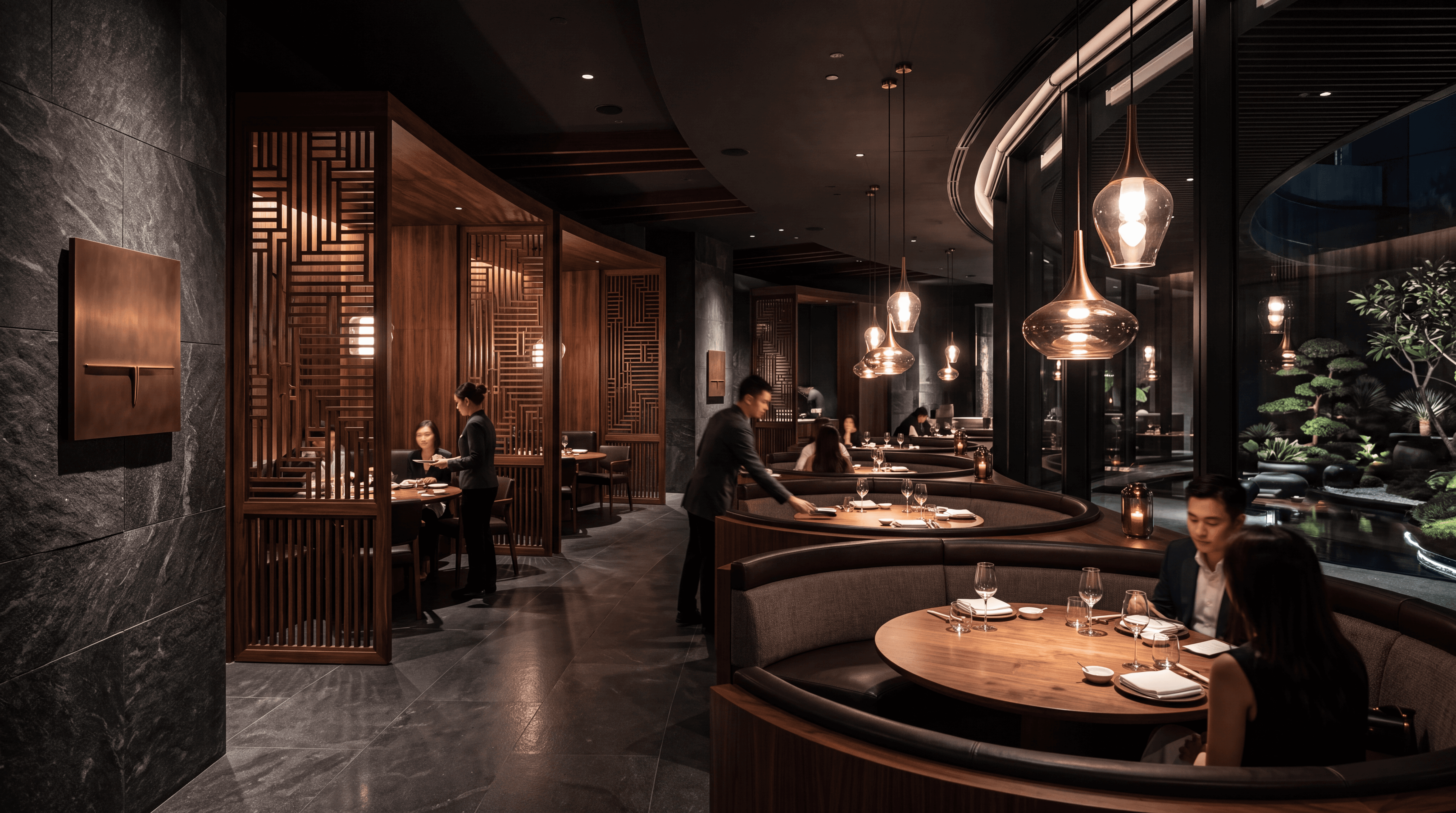
Seating plays an equally important role. A restaurant can be visually impressive but uncomfortable if tables are positioned too closely together, circulation constantly interrupts diners, or the furniture does not support the desired length of stay. Booths, banquettes, bar seating, communal tables, and private dining areas each create different social experiences. The goal is to balance operational efficiency with comfort and atmosphere.
Memorable Design Should Feel Connected to the Brand
One of the risks in luxury commercial design is creating an environment that is beautiful but could belong to almost any restaurant. A memorable project should have its own identity. That does not necessarily mean covering the walls with logos or obvious branding. Brand identity can be communicated through materials, color, artwork, furniture, lighting, details, and the overall personality of the space.
Today, restaurants also exist beyond the physical visit. Guests photograph the environment, share it on social media, and often see the space online before deciding to visit. This does not mean every corner needs to become an “Instagram moment,” but it does mean memorable visual experiences can become part of how the restaurant markets itself organically.
At ThomasOn360, we approach restaurant and hospitality visualization by thinking about more than the final image. We consider the overall design experience—how spaces connect, what guests notice first, how lighting changes the atmosphere, and what makes the environment distinctive. The strongest restaurant design is not simply something guests see. It is something they remember.