Strategic Tips
|
|

Today, creating a visually impressive design image is easier than ever. Advanced rendering software and artificial intelligence can produce stunning interiors in seconds or minutes, giving designers and clients an incredible way to explore new ideas. But there is an important distinction that is often overlooked: a beautiful image is not necessarily a buildable design.
An Image Can Look Right Without Being Right
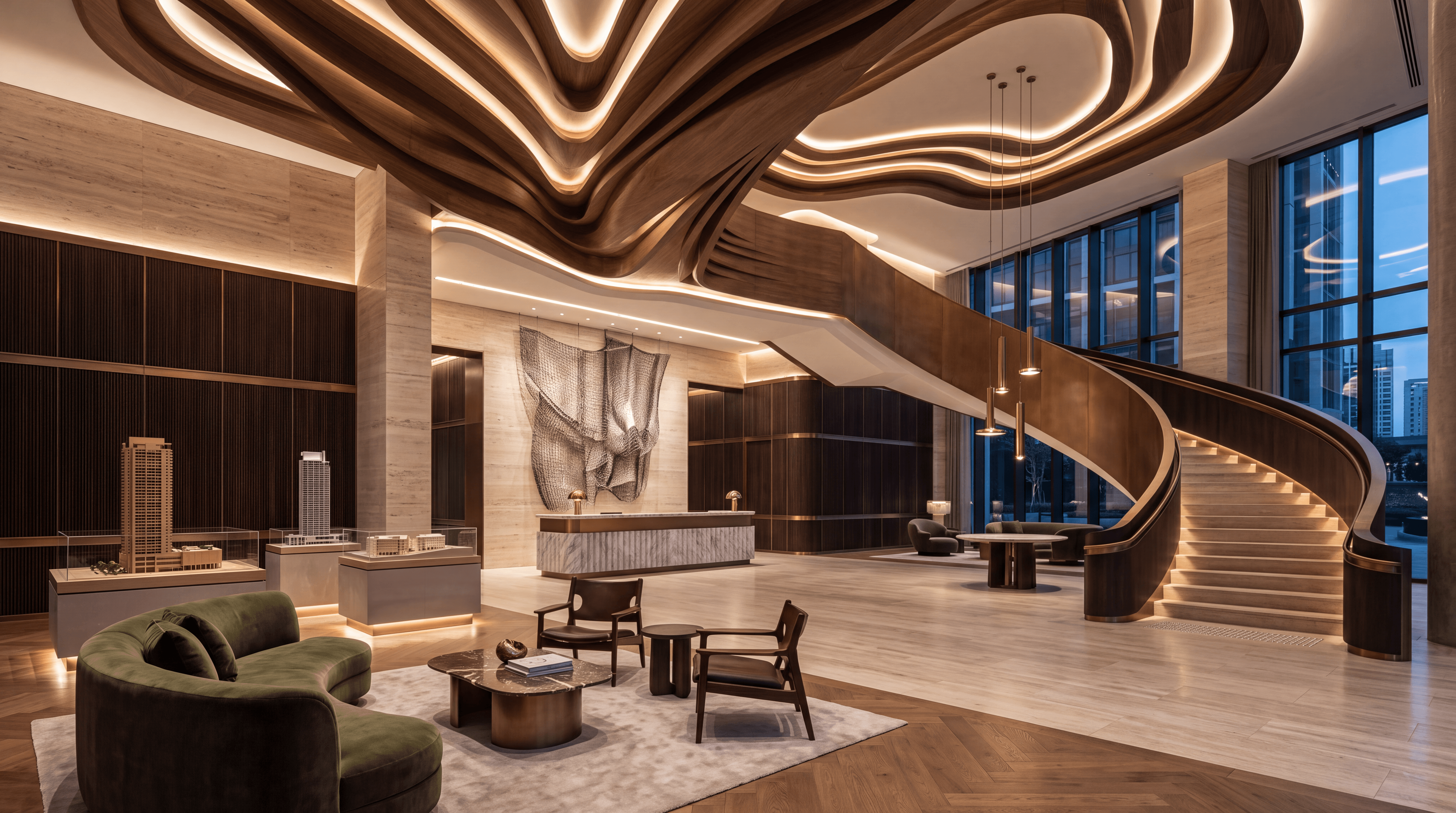
AI-generated interiors can be extremely convincing at first glance. The lighting may be dramatic, the furniture may look expensive, and the overall atmosphere may feel exactly right. Look more closely, however, and problems often begin to appear. Furniture dimensions may not make sense, doors may lead nowhere, ceiling details may be impossible to construct, materials may transition incorrectly, and architectural elements may change from one side of the room to another.
Traditional visualization can face similar problems when the person producing the image is focused only on appearance. Great design requires understanding what exists behind the image.
Real Design Requires Real-World Thinking
A successful commercial space has to satisfy many requirements at the same time. Circulation needs to work. Furniture has to fit. Materials must be appropriate for their application. Lighting needs to support both atmosphere and function. Architectural elements must connect logically, and the design must respond to the client's brand, budget and operational requirements.
This is particularly important in luxury commercial environments. Premium materials alone do not create a premium space. Proportion, detailing, lighting, furniture, construction and the experience of moving through the environment all need to work together.
Where Human Experience Matters
At ThomasOn360, visualization is not treated simply as a process of producing attractive pictures. Our background in interior design, architecture, furniture, product development, construction and 3D visualization allows us to look at a concept from multiple perspectives.
AI can help us explore possibilities faster, and advanced visualization tools allow those ideas to become incredibly realistic. But human designers still need to evaluate those possibilities and determine what actually makes sense.
Visualization Should Help Improve the Design
The best visualization does more than show what a finished project might look like. It helps designers identify problems, compare options, communicate ideas and make better decisions before construction begins.
A beautiful rendering should therefore be more than an image. It should be part of the design process.
At ThomasOn360, our goal is to combine strong design thinking, advanced visualization and emerging AI technology to create imagery that is not only impressive, but grounded in the reality of how spaces are designed, developed and ultimately built.