Strategic Tips
|
|
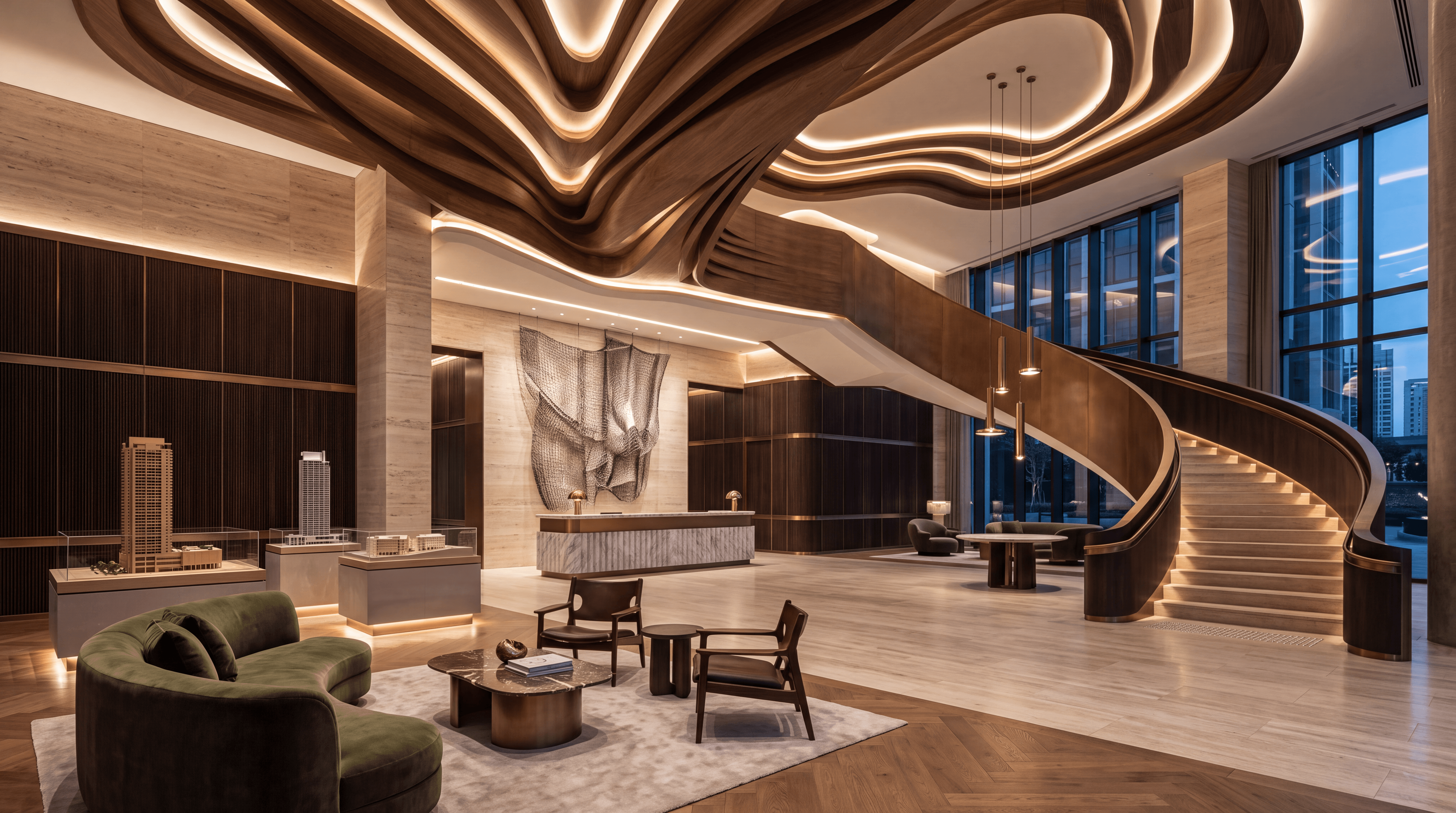
Artificial intelligence has changed architectural visualization faster than almost anyone expected. In only a few years, designers have gone from experimenting with basic image-generation tools to producing highly sophisticated architectural concepts in seconds. AI can now create dramatic hotels, restaurants, offices, retail environments, and entire buildings from a relatively simple description. For architecture and interior design firms, this creates an enormous opportunity to explore ideas faster and communicate early concepts more efficiently. However, producing an impressive image and delivering professional architectural visualization are still two very different things. While AI is becoming an important part of the visualization process, it is not yet capable of replacing the accuracy, consistency, and control that professional projects require.
AI Has Completely Changed Early Design Exploration
One of AI's greatest advantages is the speed at which it can generate possibilities. Traditionally, exploring several different design directions could require significant time. A designer might develop sketches, gather references, build preliminary models, study materials, and then work with a visualization team before the client could clearly see the idea. AI can dramatically shorten this early phase. Different architectural styles, materials, furniture concepts, lighting conditions, and moods can now be explored rapidly, allowing designers to evaluate many more possibilities before deciding which direction should move forward.
At ThomasOn360, we see tremendous value in this capability. Rather than spending production time developing every early concept to the same level of detail, AI can help identify promising directions quickly. A designer can experiment with a darker atmosphere, different materials, a more dramatic ceiling, alternative furniture, or an entirely different design language without rebuilding the project from the beginning every time. This gives the creative team more freedom to experiment and can also help clients understand possibilities much earlier in the process. For concept development, AI has already become an extremely powerful tool.
The Challenge Begins When the Design Needs to Stay the Same
The limitations become much more obvious once a concept is approved. Imagine that an AI-generated hotel lobby is selected by the client. The first image may be beautiful, but the client now wants to see the reception area from another angle. They want the exact same ceiling, furniture, wall details, stone, lighting, and artwork. Then they request several material changes and want those revisions reflected accurately across five or six different views. This is where current AI workflows can struggle because each newly generated image may reinterpret parts of the design instead of maintaining them precisely.
Professional architectural visualization depends heavily on consistency. If a chair is positioned in a particular location, it should remain there from every camera angle. If a wall has a specific proportion, it should not unexpectedly change. If the client approves a particular product, that product needs to appear correctly throughout the presentation. Architectural elements, furniture, materials, and lighting all need to remain coordinated as revisions are made. A properly developed 3D environment gives visualization teams this control because every camera is looking at the same underlying model rather than asking an AI system to recreate the space repeatedly.
Beautiful Does Not Always Mean Accurate
Another challenge is that AI is extremely good at creating something that looks believable even when it is not technically correct. An image may appear realistic while containing furniture that could never be manufactured, stairs that do not connect properly, inconsistent windows, impossible ceiling details, or architectural elements that would be difficult or impossible to construct. These issues can be easy to overlook because the overall image is visually convincing.
This distinction is particularly important for architecture and interior design firms. Visualization is not only about creating something beautiful; it is also a communication tool used to help clients understand an actual design. The closer a project gets to approval and construction, the more important accuracy becomes. Designers need confidence that what is being shown represents the intended space rather than an attractive interpretation created independently by software. Human experience is essential for identifying when an AI-generated idea makes sense and when it needs to be redesigned, corrected, or developed properly.
The Better Question Is How AI and 3D Can Work Together
For this reason, we do not believe the future is a simple choice between AI and traditional 3D visualization. The more powerful approach is combining them. AI can accelerate concept exploration, visual research, material studies, and selected production tasks. Once the direction becomes more defined, professional 3D modeling and visualization can provide the consistency, camera control, and precision needed to develop the project properly. AI can then be used again during selected stages to accelerate enhancements or explore additional possibilities.
This hybrid workflow can substantially improve efficiency because each technology is being used where it performs best. Instead of forcing AI to solve problems that require precise control, or spending unnecessary 3D production time on ideas that may never be selected, designers can move between tools depending on the stage of the project. At ThomasOn360, this combination of AI speed, professional visualization, and experienced human direction is becoming an increasingly important part of how we approach design production.