Company Updates
|
|

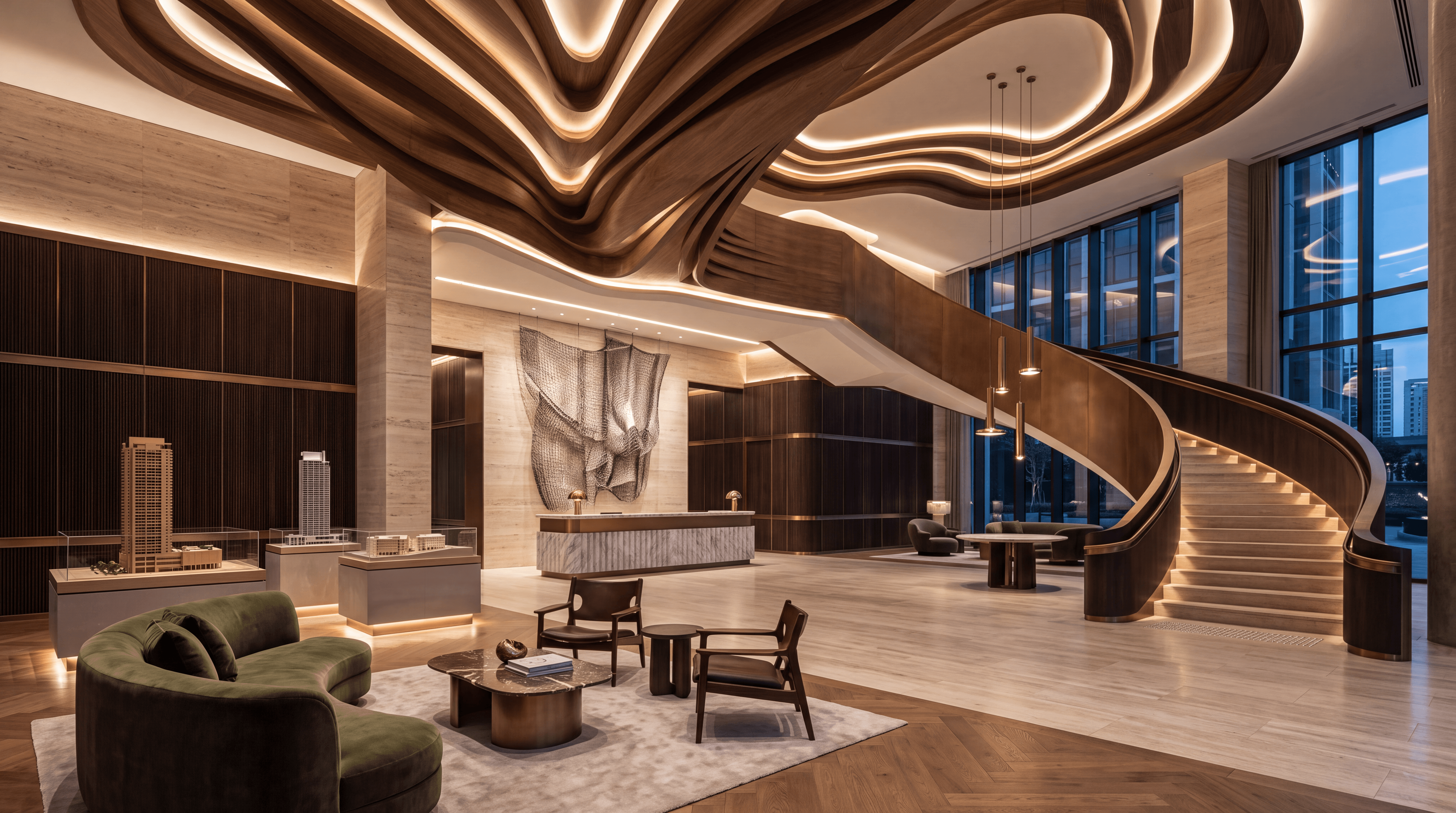
AI has made it possible to create extraordinary design concepts almost instantly. A designer can describe a dramatic hotel lobby, luxury restaurant, retail environment, or commercial space and receive a highly polished image within seconds. To someone outside the design industry, the result may appear almost finished. The materials look convincing, the lighting is beautiful, and the overall environment feels complete. But between an inspiring AI-generated image and a professional design lies an entire process of evaluation, correction, development, and decision-making.
The First Step Is Determining What Actually Works
AI generates visual possibilities rather than fully resolved designs. Once a promising concept appears, an experienced designer needs to study it carefully. Does the circulation make sense? Are the architectural proportions realistic? Could the ceiling actually be constructed? Does the furniture scale correctly? Are the materials appropriate for their locations? Are doors, stairs, lighting, and other elements functioning logically? A concept may contain a powerful idea while also containing several details that could never be built exactly as shown.
The goal is not necessarily to reject those imperfections. Sometimes the unexpected ideas produced by AI are exactly what makes the concept interesting. The designer's role is to identify which ideas are worth keeping, understand why they are successful, and then reinterpret them in a way that can become a coherent project.
The Design Then Needs to Become Controlled
Once the direction is selected, the project needs consistency. The architecture has to be established rather than reinvented for every image. Furniture needs actual dimensions and locations. Materials need to be selected intentionally. Lighting needs to work throughout the environment, and multiple camera views must represent the same space. If the client asks for revisions, those changes need to be controlled rather than producing an entirely different interpretation each time.
This is where professional 3D modeling and visualization become extremely valuable. The creative energy of the AI concept can be translated into a structured digital environment where architecture, products, materials, and lighting can be developed accurately. The result can still preserve the qualities that made the original concept exciting while providing the control required for a real project.
Human Experience Connects Inspiration With Reality
There are also decisions that cannot be solved by image generation alone. A commercial designer needs to consider how people actually use the environment, how furniture will perform, how materials will age, how details connect, what the client can afford, and how the space supports the client's brand and business goals. These are not simply visual decisions. They come from experience, communication, and understanding the context surrounding the project.
This is one of the reasons we believe AI is most powerful when it is placed in the hands of experienced professionals. The technology dramatically expands what can be explored, but human designers still determine what is appropriate, what needs refinement, and what should ultimately become part of the project.
This Is the Hybrid Workflow ThomasOn360 Is Building
At ThomasOn360, we are increasingly combining AI concept development with traditional design expertise, professional 3D visualization, animation, and interactive presentation technology. Rather than viewing these as competing methods, we see them as different stages and tools within one larger creative process.
AI can help us move faster at the beginning, explore more possibilities, and discover ideas that might have taken considerably longer through traditional methods alone. Human designers can then evaluate and guide those concepts, while controlled 3D production allows the selected direction to become consistent and presentation-ready. Depending on the project, the same digital environment can later support still renderings, animations, 360° experiences, or other forms of communication.
The future of design is unlikely to be a button that automatically creates a complete project from beginning to end. It is much more likely to be a workflow where technology removes unnecessary production time while experienced professionals remain responsible for the decisions that give a project meaning. AI can create the spark. Human expertise is what turns that spark into a design.